
After a “large-scale” investigation into 60 potential cases of non-citizens voting, the Maricopa County Attorney’s Office found only eight cases where that happened, and those spanned decades. Local election officials and politicians say that’s a sign the system is working.
Read more A seven-month investigation finds eight people who voted illegally
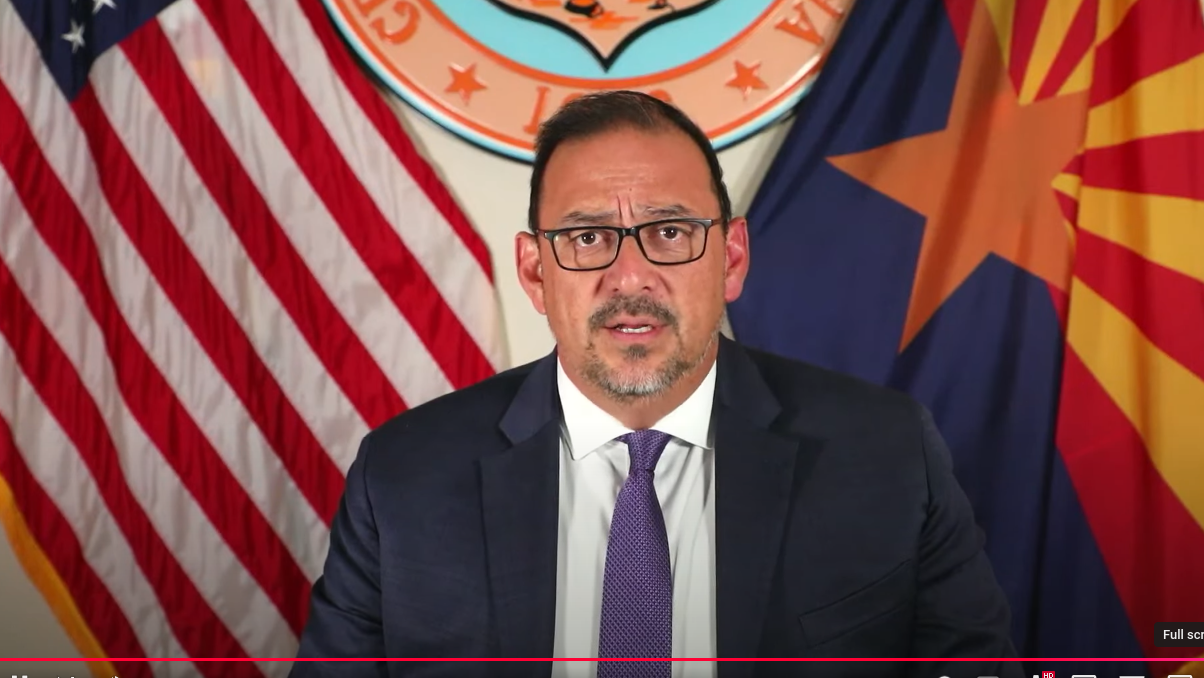
Maricopa County Recorder Heap called the county attorney Rachel Mitchell’s findings “a win for the integrity of our voter rolls and an example of the process working exactly as it should,” in a statement to New Times. Secretary of State Adrian Fontes, who has publicly clashed with Heap, said Mitchell’s findings were “another example of our system and safeguards working.”
Democrat Gov. Katie Hobbs’ spokesperson, Liliana Soto, echoed Fontes’ statement that “oversight over the system is working” and added that “any violation of election law is unacceptable and anyone found to be breaking the law should be held accountable.”
In an interview with New Times, former Maricopa County Recorder Stephen Richer said MCAO’s findings should “build great voter confidence” as “it’s indicative that our elections are largely safe from fraud.” MCAO brought investigative firepower; the Recorder’s Office used federal tools with the “gungho attitude to root out that widespread fraud,” Richer said, but “all they could get was eight non-citizens who had voted at some point in the past, not all in the same election.”
“There are some bad individual actors out of the 200 million registered voters in the United States of America, but it’s a fraction of a fraction of a percent,” Richer said. “At what point are you going to have to accept that the reason why they’re not finding massive voter fraud is because it doesn’t exist?”
In March, President Donald Trump issued an executive order requiring local municipalities to verify their voter rolls with the SAVE (Systematic Alien Verification for Entitlements) system ahead of the midterm elections. A lower court blocked the order, but on Friday, the Supreme Court ruled it could be used. In Arizona, the Secretary of State’s Office directed counties to begin using the database. However, Democrat Fontes emphasized that data in the system “must be verified before it is ever used to disqualify a voter,” in a statement.
The month before Trump’s executive order, Heap referred 60 names the SAVE system had flagged as non-citizen voters to Mitchell. While other municipalities nationwide began using the system to clean voter rolls under Trump’s order, Mitchell announced her office’s initial findings on Monday.
The SAVE system identified 207 potential non-citizens registered to vote in Maricopa County; of those, 60 had cast ballots. After seven months, investigators found that 52 of the 60 were U.S. citizens, while only eight were non-citizens registered to vote through a Motor Vehicles Department glitch. The non-citizen ballots had no bearing on any local, state, or federal election.
Maricopa County had 2.1 million registered voters in 2024, making the eight non-citizen voters only 0.0004% of that total. In Maricopa County, 87% of the voters flagged by the SAVE system as non-citizens were actually citizens.
Read more Tempe police commander could lose certification after board vote
‘An ethical and honest job’
During Monday’s press conference, Mitchell advocated for legislative changes to fix the MVD glitch.
Bill Lamoreaux, a spokesperson for the Arizona Department of Transportation, which oversees MVD, told New Times that the department has “worked closely” with Fontes’ office and election officials to “provide clear information about customers who were not required to provide authorized presence information prior to 1996.” The department also completed a 138-page audit in January 2025 that outlined a complete explanation of the glitch.
Regarding the eight voters, no charging decision has been made. But even with these minimal instances of illegal voting, Mitchell and Heap said they’ll continue to investigate the remaining 147 people the SAVE system flagged as non-citizens registered to vote.
To investigate the 60 voters, MCAO assigned two full-time investigators and two part-timers. MCAO detectives combed through documents, knocked on doors multiple times, conducted interviews, and pulled information from various sources and databases. It took investigators seven months.
Despite that massive use of manpower, Mitchell argued that “one is too many” during Monday’s press conference, as “every ineligible voter dilutes the votes of a citizen.”
Richer said Mitchell did “an ethical and honest job” with the investigation, but he called bullshit on her one-is-too-many claim. That just isn’t “the way society works,” Richer argued. “If one crime was too many, we’d have to have a police officer on every single corner. But that would probably be a major violation of our civil rights, and it would cost a bazillion gazillion dollars.”
A similar effect would occur to ensure that absolutely zero non-citizens voted, Richer said. Everyone would be given a full background check, retina and thumbprint scan, and “you’d have to vote in a specific five-minute increment on a specific day,” Richer said.
“We have a public policy system that doesn’t cost a gazillion dollars and is pretty darn easy to vote,” Richer said. “Despite those improvements, we only sacrifice a very, very, very small amount of fraud. I think we’re in a pretty good place.”
Read more Epstein enabler donated to Arizona congressman ahead of files release