
Bradley Page suffered a stroke before, but this time it was different.
The 62-year-old sat inside his black 2024 Nissan Sentra. Emergency lights flashed around him. Multiple police vehicles barricaded him in. Just moments before, he’d pulled over on the side of rural Interstate 10 toward Casa Grande. Now half a dozen cops chattered while Page sat in piles of shattered glass. State troopers had just fired rubber rounds and blown out his front and back car windows.
Read more Teenager encounters terror at Tempe frat party
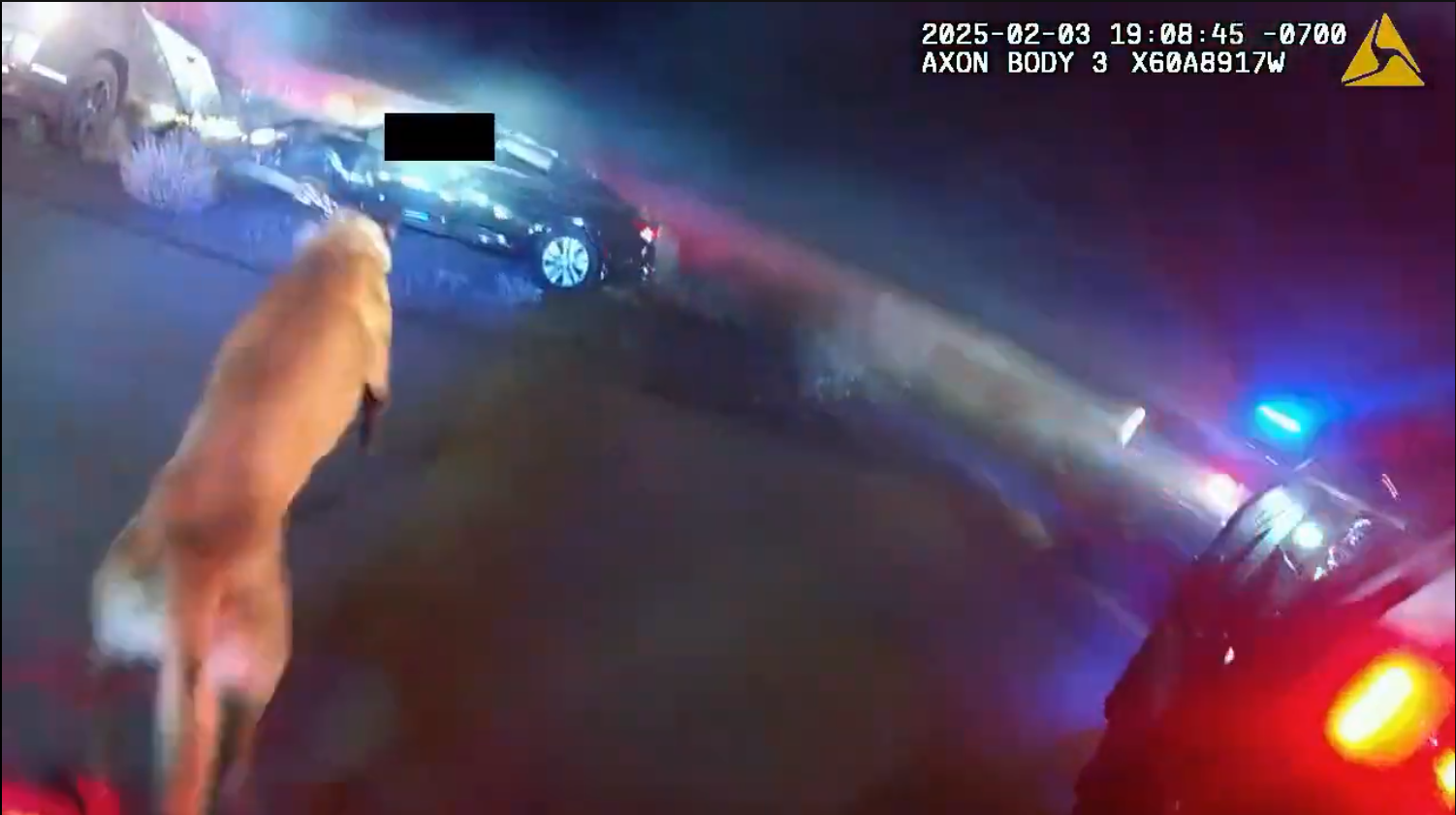
“That dude is in it to win it, ain’t he,” said Gregory Sanders, a Pinal County Sheriff’s Deputy, as he rounded the back of his vehicle. He held his K-9 close at his side. “What’s he doing?” Sanders asked the state troopers and deputy. They lined up 30 feet away from Page’s vehicle.
“He’s trying to make off again,” an unidentified state trooper with the Arizona Department of Public Safety replied.
In the car, Page was still in the throes of a stroke. His black sedan’s front wheels kicked up dust. He’d lost function of parts of his body, including his left foot, stomping the gas. He didn’t understand the drama playing out 10 yards away. He managed to gain just enough control of his right arm to press a button on his door.
“He’s putting the window down,” said T. Williams, a PCSO deputy. He lifted his rifle and aimed it at Page. “Put your hands out the window,” he said. “Hands out the window!”
Sanders’ tan-and-black Belgian Malinois barked. With each eager yelp, his head flipped toward the sky.
Page placed his left arm out the driver’s side window. Confusion clouded his mind. He struggled to speak, much less follow police orders.
“If you don’t put your hands out the window, we’re gonna send a dog,” Williams yelled to Page. “He’s gonna fight you and bite you. Put your hands out the window. You’re gonna get bit by a dog.”
“I’m gonna send him,” Sanders told Williams, who agreed. “Send him,” he responded.
“Yup, sic’ ‘em,” Sanders commanded. He pushed forward while simultaneously letting go of his K-9’s electronic lead.
What happened next is captured on chilling body camera footage, obtained by Phoenix New Times and never made public until now, from the two Pinal County sheriff’s deputies on the scene. The deputies responded after DPS, the agency in charge, called for canine support. New Times also requested the incident report and body camera footage from DPS, but has yet to receive it. The footage raises questions about how police agencies deal with a person in medical distress.
The stakes are harrowing. On this night in February 2025, a breakdown in cross-agency communication resulted in officers siccing a dog on a stroke victim.
The K-9, Morgan, sprinted forward, latched his teeth into Page’s left arm and tugged. The dog used his two back legs as leverage. “He’s on,” Sanders announced as Page moaned in pain. “Hey, we need cover,” he said. Three state troopers and two deputies advanced towards the car, their guns drawn on the incapacitated Page in the driver’s seat.
“Put your hands up now,” three state troopers yelled at Page in unison while advancing and shoving their guns in his face. The dog barked and thrashed. Page wailed.
One state trooper grabbed onto Page’s right arm and pulled him through the open driver’s seat window. But he was wearing a seatbelt. A deputy asked, “Who’s got a knife?” while Page screamed in pain. The dog snarled and sunk his teeth deeper into Page’s upper arm. Two state troopers brandishing pocketknives slashed at the seatbelt. Finally, one of them cut it.
A state trooper tried again to pull Page out of the car. A second state trooper grabbed onto a belt loop on the back of his pants and forced him onto the ground, face down. Page let out a desperate sound as a state trooper put his knee onto his back. The trooper twisted Page’s right arm to handcuff him.
Read more As local governments rethink surveillance tech, advocates worry about where it’s still used
“Put your hand behind your back now,” Sanders told Page. “You’re gonna keep getting bit.” But he couldn’t. His left arm was trapped by his own body weight. Sanders yanked Page’s left arm free. The dog snarled, not letting go of the upper left arm. “Handcuffs,” Sanders said. A state trooper and T. Williams linked metal handcuffs over Page’s wrists and clicked them shut.
The dog bit Page for nearly 70 seconds. Sanders removed the dog from Page’s arm using a jaw breaker tool. He moaned as blood ran down his bicep. Williams radioed in for emergency medical assistance for the dog bite.
“Good boy,” Sanders told the dog multiple times as they walked away from the scene. “You did a good job, buddy.” Multiple state troopers lifted Page up. “Get up,” one said to Page, as he walked him to a patrol car. State troopers and a deputy checked the car’s trunk and cleared the interior. They found nothing.
Then they exchanged fist bumps. “Good job,” they told each other.
Newly released footage: ‘Officers failed to help’
In early February, Page filed a lawsuit in Maricopa County Superior Court over his February 2025 arrest, arguing that the officers acted negligently. They should have recognized “the most obvious signs of a stroke” and known the difference between “acute medical emergencies and criminal behavior of drug intoxication,” his lawsuit read. He suffered serious injuries to his arm, as well as the lasting effects of his stroke. His lawsuit named DPS, PCSO, Pinal County Sheriff Ross Teeple, four DPS troopers, a DPS sergeant and Sanders as defendants. Officials moved the case to Arizona’s district court in May.
“After Mr. Page suffered a stroke, officers failed to help him,” Benjamin Taylor, Page’s attorney, wrote in an email to New Times. “Instead, officers used a canine to aggressively bite Mr. Page for a long time. After the canine bite, officers failed to provide medical attention in a timely manner, causing severe injuries and lasting physical and psychological trauma.”
The state troopers left Page handcuffed in the patrol car for more than 69 minutes before they transferred him to Chandler Regional Hospital for medical attention, according to the lawsuit. Medical providers confirmed Page suffered a stroke. A blood test “revealed that no illegal substances were in his system.”
What’s noticeably absent from the body camera footage is any discussion from deputies or DPS troopers that Page could be anything else other than a dangerous felony suspect. Their conclusion likely stemmed from information that Page allegedly crashed his car into multiple street signs in the Phoenix Metro area, according to a police report. Officers from the Gila River police department, who were the first to arrive at the scene, “understood” that Page was experiencing a “potential medical emergency and had weapons drawn only as a precautionary measure,” the lawsuit said.
This is hardly the only recent case of the Pinal County Sheriff’s Office failing to consider the medical needs of someone they’re using force against. In January, a deputy beat up a 79-year-old deaf Lyft driver before handcuffing him so tightly that his wrists bled.
The Pinal County Sheriff’s Office declined to comment, citing pending litigation. DPS acknowledged New Times’ request but did not respond substantially at the time of publication.
A ‘horrific event’
Deputies likely would have handled the incident differently if they had all of the information in this case, said Michael Scott, the director of the Center for Problem-Oriented Policing at Arizona State University. As the Pinal County sheriff’s deputies drove to the scene, they didn’t discuss or share information about the case, including whether Page was having a medical crisis or was even a criminal suspect, Scott noted in a review of the footage with New Times.
Scott said the state troopers and deputies’ “lack of information” about Page’s medical emergency contributed to their “improper response to the incident.” By the time they arrived at the scene, the deputies adopted DPS’ inaccurate conclusion that they were “dealing with a criminal suspect involved in a relatively serious crime,” he said.
State troopers and deputies also likely took Page’s lack of compliance with their commands as a threat, rather than considering that he may not be able to comply physically or mentally. Police officers get “suspicious” by non-compliance and infer that it’s willing, Scott said. Despite his incapacitated state, Page still tried his best to comply, Scott noted. He put his hand out the window and tried to speak. That “suggests that he is at least making some effort to be compliant,” Scott said.
That wasn’t enough for the state troopers and deputies at the scene. Shortly after Page placed his right arm out the window, Sanders sicced the dog on him. Law enforcement considers canine deployment “less lethal,” but dogs can still cause very serious injuries, Scott said. The day after Page’s arrest, hospital staff transferred him to the Arizona Center for Hand Surgery. Surgeons performed reconstructive surgery on Page’s arm to repair deep muscle, tendon and vascular damage that four penetrating dog bite wounds inflicted.
“This horrific event involving the unnecessary dog bite has disabled Mr. Page,” Taylor wrote in a text to New Times, “and physically and mentally hurt him for the rest of his life.”
Do you have information related to this story? Reach out to the reporter on Signal at 623-295-9472 or by email at [email protected].
Read more Suspected killer in gruesome cold case kills himself to avoid charges